Two people can weigh exactly the same, wear the same size, and still have completely different health profiles — because weight alone says nothing about what that weight is made of. Body fat percentage fills in that gap, and it's one of the most useful numbers you can track if you actually understand what it means.
What body fat percentage actually measures
Body fat percentage is the proportion of your total body weight that is fat mass, as opposed to lean mass — muscle, bone, organs, and water. It's a far more direct health indicator than weight alone, because it separates the mass that drives metabolic risk from the mass that doesn't.
Body fat % vs. BMI — why they disagree
BMI (Body Mass Index) is just weight divided by height squared — it has no idea whether that weight is muscle or fat. This is why a muscular athlete can register as "overweight" on the BMI scale despite having very low body fat, while someone with normal BMI but low muscle mass can carry a high body fat percentage. Body fat percentage measures composition directly, which makes it the more meaningful number for most people tracking real health, not just a number on a chart.
Healthy body fat ranges by age and gender
Healthy ranges differ meaningfully between men and women because women naturally carry more essential fat for hormonal and reproductive function. As a general guide for adults:
- Men — athletic: 6–13%, fit: 14–17%, acceptable: 18–24%, above 25% is generally considered high.
- Women — athletic: 14–20%, fit: 21–24%, acceptable: 25–31%, above 32% is generally considered high.
- Ranges shift slightly upward with age, since some fat gain and muscle loss is a normal part of aging even at a stable weight.
These bands are general guidance, not a verdict — where you fall matters less than the direction you're moving and how you feel functionally.
How body fat calculators actually work
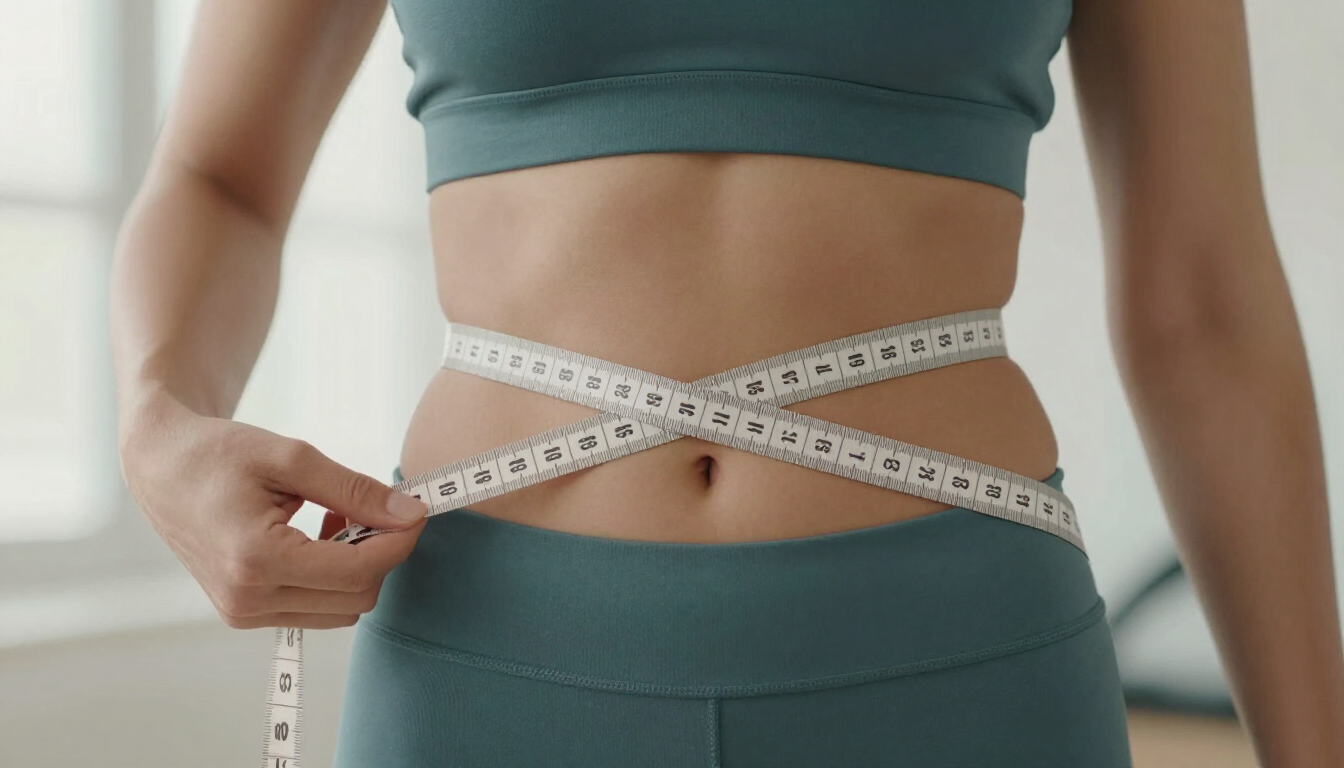
Our Body Fat Calculator uses the U.S. Navy circumference method, one of the most accessible and reasonably accurate approaches available without specialized equipment. It takes simple tape measurements — height, neck, and waist (plus hip for women) — and relates the logarithm of those circumferences to body density, which is then converted into a fat percentage. Measure snugly but without compressing the skin, and take measurements at the same time of day for the most consistent tracking over weeks.
Factors that affect your body fat percentage
- Age — metabolism naturally slows and muscle mass tends to decline over time, shifting composition even at a stable weight.
- Genetics — where your body tends to store fat, and how efficiently you build muscle, both have a strong genetic component.
- Diet — total calorie balance, protein intake, and food quality all shape whether weight changes come from fat or muscle.
- Exercise type — resistance training preserves and builds muscle during fat loss; cardio alone burns calories but doesn't protect lean mass as effectively.
- Sleep and stress — poor sleep and chronic stress elevate cortisol, which is linked to increased abdominal fat storage over time.
How to use the Body Fat Calculator effectively
Take your measurements in the morning, before eating, for consistency. Re-measure every 2–4 weeks rather than daily — body fat percentage changes slowly, and daily fluctuations from water retention will only add noise. Track the trend line over months, not the single number on any given day.
Using the "Deeper Dive" scenarios
Once you have a baseline, toggle open the Deeper Dive section for a personalized look at what realistic change could look like. It offers three gender-specific scenario cards:
- Daily Activity — models the impact of adding consistent movement (like daily walking or running) without changing your diet.
- Calorie Reduction — models a modest, sustainable calorie deficit and its effect on body fat over time.
- Combined Approach — layers both together for the fastest realistic timeline to your target range.
Each card shows your projected body fat percentage, an estimated timeline to reach a healthier range, and month-by-month progress — so you can pick an approach that matches your actual lifestyle instead of an unrealistic overnight transformation.
Body composition change is a monthly story, not a daily one — the scenarios are built to reflect that pace.
Timeline expectations for body fat reduction
A sustainable rate of fat loss is roughly 0.5–1% of body fat per month for most people combining diet and exercise — faster in the first few weeks, then gradually slowing as you approach a leaner range. Expecting visible change within days sets you up for discouragement; expecting it within two to three months of consistent effort is realistic and matches what the calculator's scenarios project.
Tips for improving body composition
- Prioritize protein at each meal to preserve muscle mass during any calorie deficit.
- Add resistance training 2–3 times a week — it protects and builds the lean mass that keeps your metabolism efficient.
- Keep a modest, sustainable calorie deficit rather than an extreme one — check your target with the Calorie Calculator.
- Protect your sleep — 7+ hours supports hormonal balance that directly affects fat storage.
- Re-measure consistently and let the trend, not any single reading, guide your decisions.
Ready to see where you stand? Try the Body Fat Calculator, explore your personalized Deeper Dive scenarios, and pair it with the Calorie Calculator to build a plan that fits the timeline you can actually stick to.
Put this into practice
Run your own numbers with the free calculators mentioned in this article.